Trotskyism

The revolutionary life and tumultuous times of Ernest Mandel

By Barry Healy

A Life for the Revolution, Documentary by Chris Den Hond, 90 minutes, 2005; A Man Called Ernest Mandel, Documentary by Frans Buyens, 40 minutes, 1972, available of two-disc DVD, available from http://www.iire.org

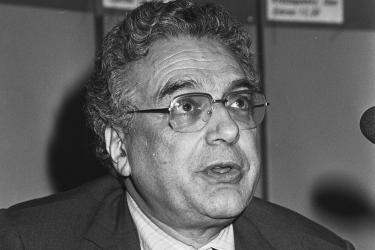
Ernest Mandel, said to be perhaps the most important Marxist theoretician of the second half of the 20th century, died aged 71 on July 20, 1995. These two documentaries reveal why he was so respected but also expose a great deal more.

A Life for the Revolution uses Mandel’s life as a lens to examine some of the most significant revolutionary developments of the last few generations, with stirring archival footage and interviews with participants. The 1972 “talking head” interview A Man Called Ernest Mandel, in which he explains important aspects of socialist democracy and workers’ control of the means of production, is packaged as an extra.

Baruch Hirson: The South African left and the Russian connection (1991)

Click HERE to view a CVET video production of a seminar at the
University of the Western Cape on the past, present, and future of
Marxism in South Africa, held in September 1991. It was addressed by veteran South African Trotskyist activist Baruch Hirson. Participating in the seminar were Ciraj
Rassool, Baruch Hirson, Andrew Nash, Colin Bundy, Adam Habib, Paul
Allen and Neville Alexander.  

Baruch Hirson: The South African left and the Russian connection (1991)

Marxism in South Africa - Past, Present, & Future

September 6-8, 1991

The DSP and the Fourth International

Introduction

On August 17, 1985 the National Committee of the Democratic Socialist Perpective (then named the Socialist Workers Party) voted to end the party’s affiliation to the Fourth International, the international organisation founded in 1938 by the Russian revolutionary Leon Trotsky and his supporters around the world.

Some more comments on Peter Taaffe's Cuba book

[This article first appeared in the Democratic Socialist Party's internal discussion bulletin The Activist - Volume 10, Number 9, October 2000.]


By Doug Lorimer

Last year I wrote a letter to Farooq Tariq, general secretary of the Labour Party Pakistan, responding to his request for our leadership's disagreements with the Committee for a Workers' International's view of Cuba. The letter took the form of an extended polemic against Socialist Party of England and Wales (SPEW) general secretary Peter Taaffe's 1982 pamphlet Cuba: Analysis of the Revolution. The letter was subsequently printed in The Activist for the information of DSP members. In June this year [2000] the CWI published a book by Peter Taaffe replying to my letter to Comrade Tariq entitled Cuba: Socialism and Democracy.

The Cuban Revolution and its leadership: A criticism of Peter Taaffe's pamphlet 'Cuba: Analysis of the Revolution'

The following article was written at the request of Farooq Tariq, general secretary of the Labour Party Pakistan, as an initial contribution to a discussion between the LPP and the DSP on the character of the leadership of the Cuban socialist state and the Communist Party of Cuba. It was published in the Volume 9, Number 4, 1999, edition of The Activist, the Democratic Socialist Party's internal discussion bulletin.

By Doug Lorimer

The CPI (M) and stages of revolution

By Dipankar Basu

March 25, 2008 -- This article attempts to throw some light on the following two questions: (1) How does the classical Marxist tradition conceptualise the relationship between the two stages of revolution: democratic and the socialist? (2) Does the democratic revolution lead to deepening and widening capitalism? Is capitalism necessary to develop the productive capacity of a society?

South Africa: Two economies - or one system of superexploitation

By Patrick Bond
[The following is the introduction to ``Transcending two economies – renewed debates in South African political economy'', a special issue of Africanus, Journal of Development Studies (Vol. 37 No. 2 2007, ISSN 0304-615x). It is republished with permission.The full issue is available for free download at http://www.nu.ac.za/ccs/files/africanus_1.pdf ]

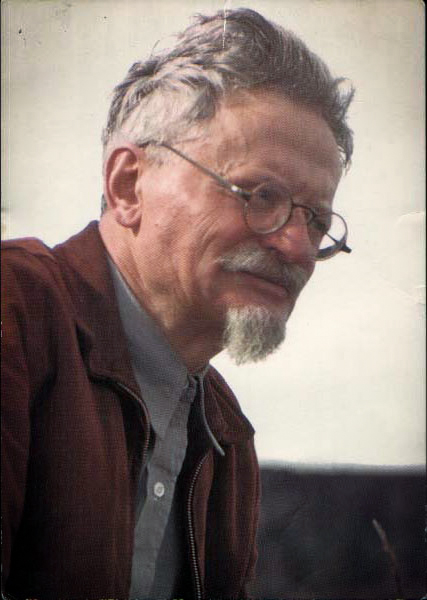
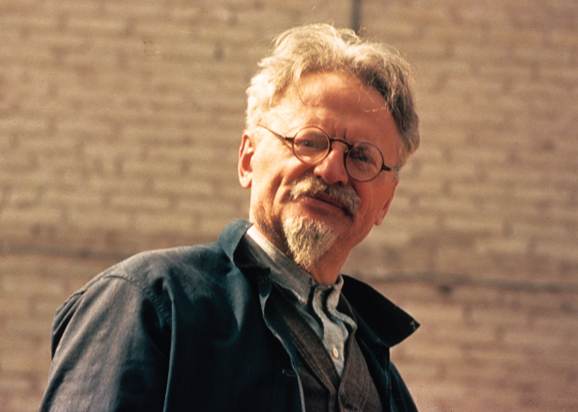
Trotsky's theory of permanent revolution: A long and still relevant debate

By John Nebauer

Review of Trotsky's Theory of Permanent Revolution: A Leninist critique, by Doug Lorimer, Resistance Books, Sydney, 1998, A$6.95.

John Nebauer is a member of the Democratic Socialist Party of Australia.

The left in Pakistan: a brief history

By Farooq Sulehria

Farooq Sulehria is a member of the Executive Committee of the Labour Party Pakistan and of the Editorial Board of Links.

The uninterrupted revolution in the Philippines

By Reihana Mohideen

Reihana Mohideen was, at the time of writing, a member of the Executive Council of the SPP and of the Links Editorial Board.

In Defence of Lenin's Marxist Policy of a Two-Stage, Uninterrupted Revolution

By Doug Lorimer

Phil Hearse's polemic against my pamphlet proceeds from a fundamentally false assumption, i.e., that it "attempts [to give] a general strategic view" of revolution in "the semi-colonial and dependent semi-industrialised countries". He alleges that my pamphlet presents Lenin's policy of carrying out the proletarian revolution in semi-feudal Russia in two stages (a bourgeois democratic and then a socialist stage) "as a general schema for the 'Third World' today". Nowhere in the pamphlet do I make such a

Either A 'Socialist Revolution Or A Make-Believe Revolution': A Rejoinder to Doug Lorimer

By Phil Hearse

"The International of Crime and Treason [i.e., the counter-revolutionary coordination of imperialism—PH] has in fact been organised. On the other hand, the indigenous bourgeoisies have lost all their capacity to oppose imperialism—if they ever had it—and they have become the last card in the pack. There are no other alternatives: either a socialist revolution or a make-believe revolution."—Ernesto Che Guevara, Message to the Tricontinental 1967 (emphasis added).

The Ukraine scam, internationals and internationalism

By John Percy

CONTENTS

International Potemkin villages

Wrong conception

Actual Marxist practice

The Comintern

Trotskyist tradition

Real internationalism

Globalisation

United parties

Notes

Embarrassing details of an extensive scam being operated against left-wing organisations surfaced in the Ukraine in mid-2003. At least twelve, possibly up to twenty, small left groups, mainly in England and the United States, were conned by an enterprising group of Ukrainian politicos pretending to be supporters of each of these parties or their "internationals" setting up their Ukrainian "sections".

'Socialism in one country' and the Cuban Revolution

By Celia Hart

Celia Hart is the daughter of two veterans of the Cuban revolution: Haydée Santamaría, who participated in the July 26,1953, assault on the Moncada Barracks, and Armando Hart, the former minister of culture. Reprinted from Tricontinental Magazine.


CONTENTS

Why Trotsky?

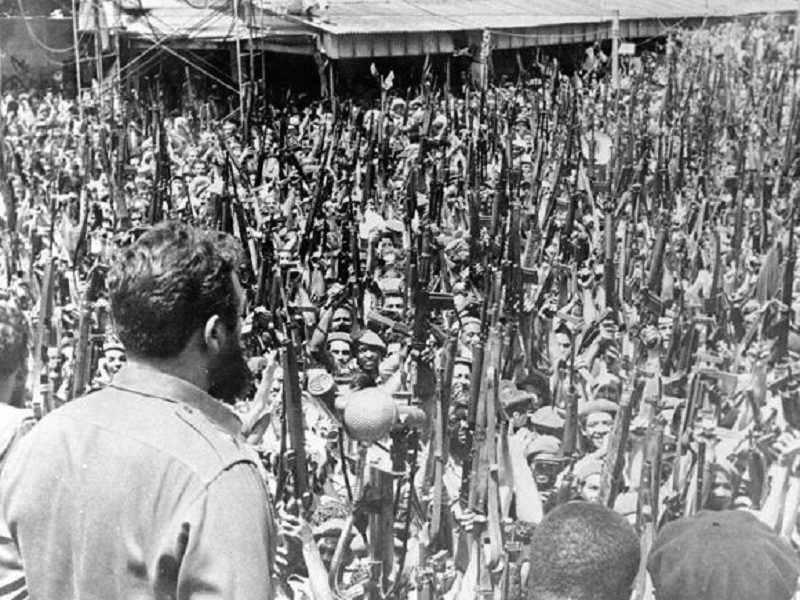
The Cuban Revolution, paradigm of a socialist revolution

Internationalism in the development of the Cuban revolution

Social justice: the other cornerstone of the Cuban nation

Final notes


"Homeland is humanity."—José Martí

The 1905 revolution and its lessons

by Doug Lorimer

Doug Lorimer is a member of the National Executive of the Democratic Socialist Perspective in Australia. This is a talk presented to the DSP's January 2005 Marxism Summer School.

Contents

Soviets of workers' deputies

January 1905 protest

Bolsheviks and Mensheviks

Anti-feudal revolution

Marxism versus Narodnism

Marxism and the peasantry

Monopoly capitalism

Russo-Japanese War

Lessons drawn by Lenin

Footnotes

Syndicate content

Powered by Drupal - Design by Artinet