
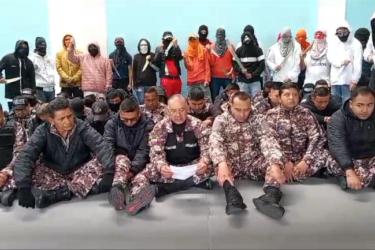
Guillaume Long — Ecuador is swiftly becoming the new frontline of the failed US War on Drugs. It may take years or even decades for the country to rebuild a state that can guarantee peace and security for its people.
Ecuador
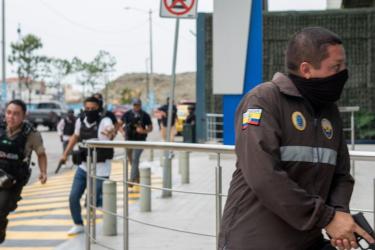
Revolutionary Movement of Workers — An immense wave of violence has been unleashed throughout the country. Ecuador is going through a moment of very deep crisis, perhaps the most serious in its history.
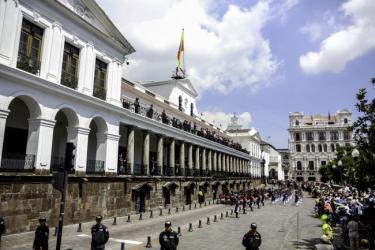
Ociel Alí López — With two weeks to go before Ecuador's presidential elections, what obstacles does Correísmo face in defeating its right-wing opponents? Will Luisa González become Ecuador's first elected woman president?

By Eric Toussaint
April 23, 2021 — Links International Journal of Socialist Renewal reposted from CADTM — On 11 April 2021, Guillermo Lasso (52,4%), the right-wing candidate, defeated Andres Arauz, the candidate supported by Rafael Correa and part of the Left, by 52.4% vs 47.6% in the second round of ballots for the presidential election. Lasso was elected thanks to the division of the Left, since a significant part of it, which has become deeply diffident of Rafael Correa, called for a null vote. Votes on the popular side, that represented a clear majority in the first round of February 2021, were divided, which made it possible for a former banker to be elected president. The situation is serious for an opportunity to break away from Lenin Moreno’s brutal neoliberal policies has been lost. Former banker Lasso, though critical of Lenin Moreno’s positions out of sheer electoral calculation, will continue in the same harmful direction: a deepening of neoliberal policies, submission to the private interests of Big Capital, particularly of Ecuador’s powerful banking sector and of the import-export industry, and submission to the United States. How can we explain that a significant part of popular votes did not go to Andres Arauz to prevent Guillermo Lasso from getting elected? It can be accounted for by the rejection prompted by Rafael Correa’s policies, particularly after 2011, among part of the Left, notably with the CONAIE, the Confederation of Indigenous Nations of Ecuador.
Federico Fuentes
24-03-2017 - Traduzione del Comitato Carlos Fonseca - L’Ecuador tornerà alle urne il 2 aprile dopo che il primo turno delle elezioni presidenziali non aveva dato una vittoria decisiva a Lenín Moreno, il candidato disposto a continuare la “Rivoluzione Cittadina” dell’uscente presidente Rafael Correa, che ha favorito i poveri.
Ora Moreno affronta la sfida di riuscire a far sì che l’Ecuador non si aggiunga alla lista dei paesi della regione nei quali la sinistra ha recentemente perso le elezioni.Ecuador volverá a las urnas el 2 de abril después de que la primera vuelta de las elecciones presidenciales no otorgara una victoria decisiva a Lenín Moreno, el candidato dispuesto a continuar la “Revolución Ciudadana” del saliente presidente Rafael Correa, que ha favorecido a los pobres.
Ahora Moreno se enfrenta al reto de conseguir que Ecuador no se sume a la lista de países de la región en los que la izquierda ha perdido recientemente las elecciones.
By Claudio Katz, introduction and translation by Richard Fidler